
No sense of historical responsibility: business park permanently destroys the site of the former Hirtenberg concentration camp
27.08.2025
A joint statement by the Mauthausen Memorial and the Mauthausen Committee Austria
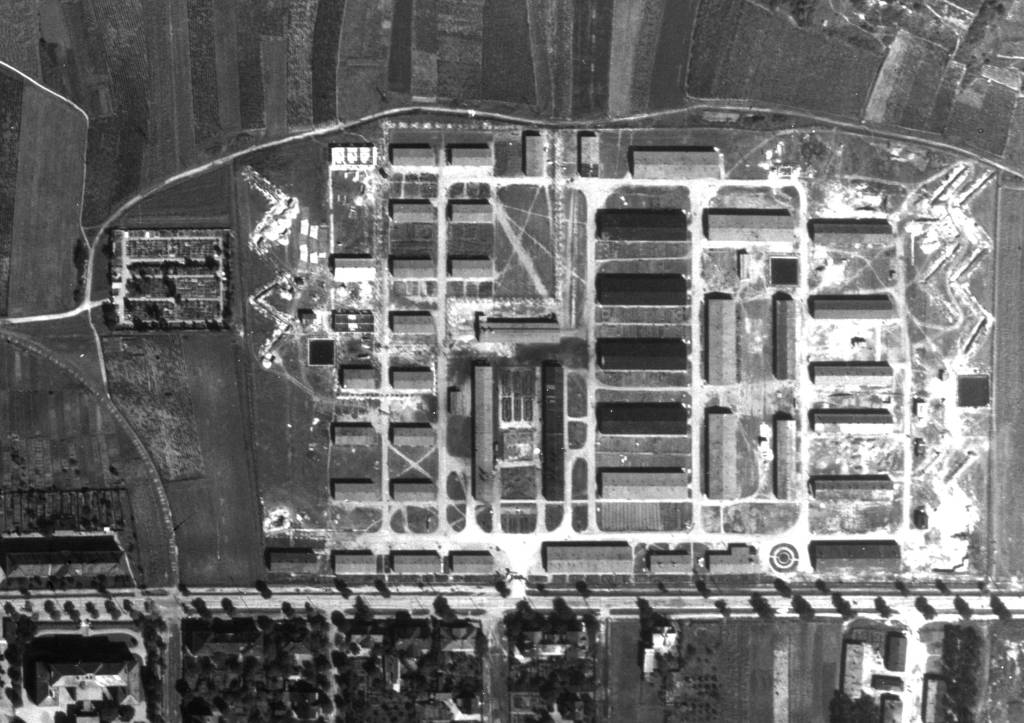
Since 2021, following the announcement of the development plans, the Mauthausen Memorial and the Mauthausen Committee Austria, together with the local initiative ‘Mauthausen Memorial – Hirtenberg Satellite Camp’, have been campaigning vigorously for the preservation of the artefacts and the commemoration of the victims of the Hirtenberg women’s concentration camp. Around 400 women and girls were held here and forced to perform hard labour. It is one of two larger subcamps housing exclusively female prisoners, and the only one where historical remains were still present on a significant scale – the other, Lenzing, was razed to the ground after the war.
Developing the site of the former concentration camp will inevitably lead to the destruction of its physical evidence, render yet another site of Nazi terror unrecognisable, and consign it to oblivion. We therefore joined forces with the Jewish Community of Vienna and the local initiative to call for the plans to build industrial warehouses at this very location to be abandoned. Instead, the site should be used to create a dignified place of remembrance in collaboration with local remembrance initiatives and ourselves. The MauthausenMemorial is involved in several initiatives to preserve the remains of former subcamps, is currently carrying out the large-scale redevelopment of the Gusen Memorial, and continues to support the further development of the site in Leobersdorf.
In an era when first-hand accounts from survivors are no longer available, architectural relics are becoming increasingly important. We therefore see it as our duty to harness the potential of these already scarce remains for educational purposes, in collaboration with locally committed individuals – as is currently the case in Guntramsdorf – or at the very least to defend them against commercial interests that would make dignified remembrance impossible.
The mistakes made after 1945, when many concentration camp sites were demolished and built over, must not be repeated. Every remnant of a former concentration camp bears witness to the injustices that took place there and is worthy of protection and preservation. We cannot understand any views to the contrary. The fact that the remains of the Hirtenberg concentration camp are, ‘from the current perspective’, insufficient to warrant their protection should not be taken as a licence to destroy them and their topographical context beyond repair.
“It is telling that in 2025 – precisely in the commemorative year in which we mark 80 years since the liberation – such a step backwards is taking place, and that the memory of the victims of Nazism is being subordinated to financial interests through the development of the site of their suffering,” said Willi Mernyi, Chair of the Mauthausen Committee Austria. “Clearly, there is still a great deal of work to be done to raise awareness in this area.”
The Mauthausen Memorial was informed only at very short notice and in a half-hearted manner on 15 August about a site visit on 20 August, during which we learnt that construction was due to begin immediately, the very next day.
This course of action leaves no doubt that the intention is to avoid facing up to historical responsibility and to stifle further discussion. We must recognise that the site of the former Hirtenberg concentration camp is lost and will no longer have any social significance in the future. This makes it all the more important to work with vigour and a united effort to ensure that the women and girls who were forced to carry out labour here are not forgotten.
“It is a disgrace that, in 2025, it is possible to demolish the remains of a former concentration camp without any objective public debate on the matter,” says Barbara Glück, director of the Mauthausen Memorial. “This loss of historical structures and potential sources of information for research cannot be reversed.”
As a result of these measures, this physical artefact has been irretrievably lost. What gives us hope, however, is the commitment of local initiatives, with whom we will work together to find other ways and means of commemorating the victims of the Hirtenberg concentration camp.